




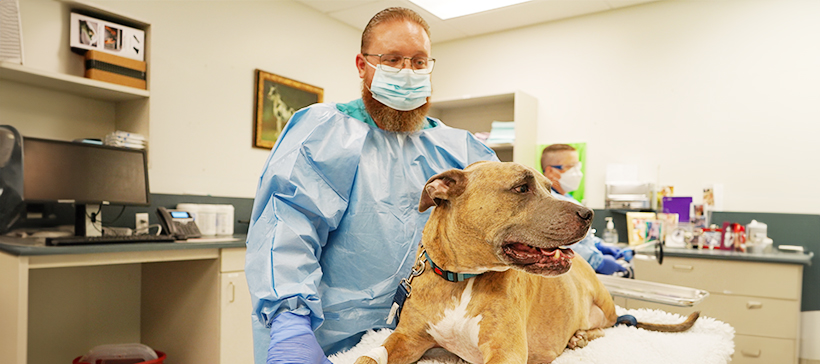
Comparative Oncology
The Comparative Oncology Program draws on UC Davis' key strengths as the top-ranked veterinary school in the country. The Program investigates the disease mechanisms which are implicated in the genesis and progression of cancer and seeks to understand the genetics, immunology, and microenvironment of tumors in the preclinical setting using animal models. This approach promotes animal health and provide insights into human cancer.
The Program aims to elucidate the molecular and cellular mechanisms by which cellular and viral oncogenes and tumor suppressor genes are involved in tumor initiation, progression, and metastasis, characterize metabolic and immunologic tumor heterogeneity to inform cancer diagnosis and treatment, and conduct preclinical trials using companion animal cancer patients in order to inform human cancer research and promote translation, especially in the area of innovative immunotherapy.
Membership resources for researchers
Involved in cancer research? Cancer Center membership is open to all UC Davis faculty and Lawrence Livermore National Laboratory researchers with a focused interest in cancer or related disciplines, and a commitment to contributing to the Cancer Center mission. Collaborate with like-minded investigators, gain access to resources, and contribute to the only NCI-designated Cancer Center positioned to address the cancer burden in Northern California's Central Valley.
Become a part of the collaborative research community at the UC Davis Comprehensive Cancer Center. Learn more about becoming a member and the valuable resources available to our researchers.
Comparative Oncology Program Leaders
|
|
Professor, Department of Surgical & Radiological Sciences Expertise: basic comparative oncology |
|
|
Professor, Department of Surgical & Radiological Sciences Expertise: basic comparative oncology |
|
|
Professor, Department of Surgery Expertise: cross-species immunology, including canine immunology and immunotherapy |



Biomedical Technology Program Research Highlights

Inhaled Recombinant Human IL-15 in Dogs with Naturally Occurring Pulmonary Metastases from Osteosarcoma or Melanoma: a Phase 1 Study of Clinical Activity and Correlates of Response
Fractionated Oral Dosing and its Effect on Cyclophosphamide Pharmacokinetics in Dogs with High-Grade Multicentric Lymphoma
Human Soft Tissue Sarcomas Harbor an Intratumoral Viral Microbiome which is Linked with Natural Killer Cell Infiltrate and Prognosis