Thoracic Surgery Training Program
UC Davis has a long history of training academic surgeons. In 1993, the Cardiothoracic Surgery Program welcomed its first trainees. Since that time, the Division has built a strong training program of fostering clinical expertise, scientific inquiry, and intellectual development. The training program in cardiothoracic surgery provides a wealth of clinical and operative experience in a collegial atmosphere, a diverse house staff and faculty interested in teaching, and a wide variety of clinical and basic research experiences. "U.S. News and World Report" consistently ranks UC Davis Health among the nation's best programs in cardiology and heart surgery, and pulmonology and lung surgery.
The Cardiothoracic Residency Program at UC Davis is dedicated to producing balanced, well-qualified, cardiothoracic surgeons who are prepared to serve the community through careers in either private practice or academia, without the need for additional postgraduate fellowship training. Our program aims include:
- To offer a comprehensive education curriculum, committed to the intellectual, technical and professional maturation of future Cardiothoracic Surgeons
- To support resident research initiatives that will transform patient care
- Develop a culturally competent workforce who practices patient-centered and cost-effective care
- Develop clinicians who provide the highest quality cardiothoracic surgical care within the communities they serve
- Provide the foundation for graduates to be leaders and innovators
Here at UC Davis, we are committed to educating exceptional cardiothoracic surgeons through outstanding personal mentorship, operative training, and research leadership.
As a fully accredited ACGME residency program, we believe in fostering an inclusive environment rich in diversity, innovation, and continuous learning, as well as providing each resident the opportunity to achieve their specific career goals. Since 1993, our Thoracic Surgery Training Program has offered a well-balanced curriculum designed to train the next generation of cardiothoracic surgeons, leaders, innovators, and scientists. In addition to receiving state-of-the-art training in cardiothoracic surgery, our residents are offered opportunities to conduct research including clinical trials.
Trainees are selected each year through the Thoracic Surgery National Residency Matching Program. The American Board of Thoracic Surgery (ABTS) has certified all trainees that have completed the program.
Our residency program offers two training pathways for ABTS eligibility: 1) Independent 2-year Pathway and 2) Integrated 6-year Pathway. Both pathways participate in the National Residency Match Program (NRMP). Applications are being accepted through the Electronic Residency Application Service (ERAS). Currently we are only matching by Independent Pathway.
The Integrated 6-year Pathway is a comprehensive six-year training program. Eligible applicants meet the following qualifications: 1) graduate of medical schools in the US and Canada accredited by the Liaison Committee on Medical Education (LCME); 2) graduate of colleges of osteopathic medicine in the US accredited by the American Osteopathic Association (AOA). Each rotation in the thoracic residency incorporates outpatient instruction and responsibility, where pre-, peri- and postoperative care is integrated at various levels. All general thoracic rotations and the majority of adult cardiac rotations will occur during the first four post graduate years of the proposed 6-year integrated program. The thoracic resident will be involved in the majority of pre-operative assessment, evaluation and care and nearly all perioperative and post-operative care and management.
The faculty sets specific goals for the trainees, the most important being that the residents learn to make appropriate surgical judgments and develop technical skills that will enable them to provide superb cardiothoracic care for their patients upon completion of the program.
Our Cardiothoracic Surgery Residency Program seeks to train the next generation of exceptional cardiac and thoracic surgeons, in a rich academic environment characterized by innovation, excellence and outstanding mentorship.
The Training Program - The faculty of the Divisions of Cardiac Surgery and General Thoracic Surgery are responsible for the training of the thoracic residents, and for the general surgical residents and medical students who rotate on the service. Both categorical and preliminary residents in general surgery rotate on the service. During their initial experience, they are familiarized with techniques in critical care, evaluation of the thoracic patient and basic surgical skills. All residents participate very actively in the outpatient and inpatient settings.
The Cardiothoracic Residency Program is designed to provide residents with focused, hands-on experience divided equally between cardiac and thoracic surgery and offers exposure to all aspects of cardiothoracic surgery including general thoracic surgery, adult cardiac surgery, and pediatric cardiac surgery. Experience obtained in each of these areas has traditionally far exceeded the requirements of the Residency Review Committee for Thoracic Surgery and the American Board of Thoracic Surgery. In addition, there are multiple didactic programs each week covering the entire scope of the cardiothoracic curriculum.
Our Residents will be part of an incredibly rich, academic environment and each year our UC Davis Surgery research and thought leadership is featured in many publications in journals including Nature, JAMA, and leading specialty journals. Each thoracic resident is encouraged to participate in one clinical research project per year. The division maintains funds to support the presentation of this research material by the thoracic resident at regional and national meetings
Faculty members of both divisions are actively involved in both clinical and basic research. The basic lab has had success with multiple presentations and publications in cardiothoracic journals and at national and regional meetings. Previous areas of investigation have included laboratory and clinical studies on myocardial protection, organ donor preservation and management, off pump coronary bypass surgery, esophageal surgery, and lung cancer.
The Cardiothoracic surgery residency program at UC Davis encompass the operative and perioperative care as well as critical care of patients with pathological conditions within the chest. Included are the surgical care of coronary artery disease, congenital anomalies of the chest and heart and great vessels, traumatic injuries of the chest, neoplasms of the lung, esophagus, chest wall, mediastinum and deformities of the diaphragm. In addition to traditional operative procedures, minimally invasive and endovascular procedures are included in the residents’ training.
As described above, the program is balanced, offering the three disciplines of cardiothoracic surgery: general thoracic surgery, adult cardiac surgery, and pediatric cardiac surgery. Over 900 major cardiothoracic surgical procedures are performed each year. The intimate size of the program affords one-on-one interaction between residents and faculty. Advanced surgical technology is being offered to patients on a regular basis including ventricular assist devices, robotic adult cardiac surgery, thoracic endovascular aortic repair or TEVAR, VATS lobectomy and navigational bronchoscopy. In addition, UC Davis is a high volume center for complex esophageal disease, with a top Leapfrog Group rating for esophagectomy, the third highest esophagectomy volume in northern California, and the top volume in the Sacramento area.
The Thoracic Surgery Residency Programs (Independent and Integrated) participate in the National Resident Matching Program (NRMP). The Division of Cardiothoracic Surgery grants interviews after an initial screening process. The Thoracic Surgery Training Program participates in the Electronic Residency Application Service (ERAS). If you are applying for the Thoracic Surgery Residency, it is listed through ERAS under AAMC ID: 1046460F0 (Independent) and AAMC ID: 4610546105 (Integrated). For more information visit the NRMP Specialty Match website.
Important application information: A requirement for acceptance into a residency program in the State of California is that an applicant is eligible for medical licensure. The California Medical Board has new licensing requirements that will go into effect on January 1, 2020. The new requirements are as follows:
Key Information Regarding California GME Licensure Requirements
Changes effective January 1, 2020
- A Postgraduate Training License (PTL) will be required for all residents participating in a California ACGME program for the first 36 months of any ACGME training
- A trainee must obtain a PTL within 180 days after enrollment in the program
- After the first 36 months of any ACGME training residents/fellows must obtain a full and unrestricted California medical license
- The PTL will be valid until 90 days after completion of the first 36 months of any ACGME training (to allow an applicant time to obtain a full and unrestricted license)
* A PTAL will no longer be required for International Medical Graduates (IMG)
- All residents and fellows are required to have a full and unrestricted California Medical License after they complete 36 months of any ACGME (or RCPSC, CFPC) program training
- California Licensure Requirements:
- 36 months of ACGME training (ACGME-International Training is not applicable)
- At least 24 consecutive months of ACGME training
- In the same ACGME program
- Within the first 36 months of training
* If a candidate does not meet this criterion, they may not train in California beyond 36 total months under any circumstances
* ACGME-International Training is not applicable for a California Medical License
- Applicants may (should) submit the PTL application and supporting documents soon as they have confirmation of acceptance into the ACGME program
For additional information please see the California Medical Board website.
If you have any questions as to whether or not your medical school curriculum meets the requirement for licensure in the State of California, please contact the Medical Board directly at 916-263-2344.
For the Independent Program the Medical Board of California requires that all residents (regardless of their specialty) be licensed prior to the start of the PG-III training year. If you have any questions as to whether or not your medical school curriculum meets the requirement for licensure in the State of California, please contact the Medical Board directly at 916-263-2344.
Currently, the University of California Davis Medical Center does not require drug testing of its residents. However, certain required rotations in the residency program, outside the UC Davis Medical Center, do require drug testing.
Required application documents:
- NRMP Thoracic Surgery application form
- One page curriculum vitae
- One page personal statement
- Three (3) letters of recommendation
- USMLE Scores, Step I, Step II and Step III (If applicable)
- ABSITE Scores (If applicable)
Statement on Applicants Who May be Interested in Applying to both the UC Davis Cardiothoracic Integrative 6-Year (I-6) Residency Program and the General Surgery Residency Program:
If applicants are interested in the CT Surgery I-6 Residency and General Surgery Residency they are encouraged to apply to both programs. Applicants who apply to both programs will be given equal and fair evaluation. If an applicant is granted an interview to both programs, UC Davis will make best efforts to accommodate a same day interview for the applicant.
| Gary Raff, M.D. Program Director, Cardiothoracic Surgery Residency |
| Edgardo Salcedo, M.D. Vice Chair for Education Department of Surgery |
(SUR 468) Cardiothoracic Surgery
Physician in Charge: Staff
The student works as an acting intern, participating in perioperative management and operations on the heart, lungs, mediastinum and other thoracic structures. Regularly scheduled teaching conferences are conducted.
Should you be interested in enrolling, please download application directions at the Visiting Student admission page.
Mr. Thanh Huynh, B.S.
Department of Surgery Education
2335 Stockton Blvd., NAOB 5th Floor
Sacramento, CA 95817
Office: 916-734-2726
Fax: 916-734-5633
Email: Tvhhuynh@ucdavis.edu
2020 Vivien T. Thomas Lecture: The Saga of Vivien Thomas: Discrimination, Segregation, and Bias (January 2020)
2019 Roundtable Discussion: Should Robotics Be Part of Cardiothoracic Surgery Training? (January 2019)
Beyond the Abstract: Culture of Safety and Gender Inclusion in Cardiothoracic Surgery (December 2018)
2018 Roundtable Discussion: Diversity in Cardiothoracic Surgery. (March 2018)
Why I Became a Heart/Lung Surgeon. (January 2017)
Unconscious Bias: Addressing the Hidden Impact on Surgical Education (PDF)
Ask anyone what they love about Sacramento and you’re likely to hear, “it’s so close to everything… like Lake Tahoe, San Francisco, Yosemite, Napa Valley.” Centrally located in Northern California, Sacramento is considered one of the state’s most affordable cities. Known as California and America’s Farm-to-Fork capital, Sacramento is a uniquely located city that has the approachability of a town with all the amenities that the 6th largest city in California has to offer. With mild winters and copious amounts of sunshine, you’ll find Sacramento a great place to spend time outdoors and visit nearby nature reserves, parks and extensive recreation opportunities.
As one of the fastest growing cities in California, we are home to a vibrant downtown, historic Old Sacramento waterfront, museums, sports and over 200 wineries in the region. As part of Sacramento’s impressive art and culture scene, the Wide Open Walls Mural Festival supported more than 650 murals in the region. We are home to the NBA’s Sacramento Kings, brand new MLS Sacramento Republic FC, the San Francisco Giants’ Triple-A affiliate Sacramento River Cats, and the Capital leg of the Amgen Bike Tour of California.
For more information about Sacramento, Visit Sacramento has information on hotels, things to do and an updated event calendar. You can also download the Sacramento Field Guide for things to do and neighborhoods to explore.
Divisions of General Thoracic Surgery And Cardiothoracic Surgery
| Gary Raff, M.D. |
Program Director, Cardiothoracic Residency Program |
| Bob Kiaii, M.D. | Chief, Division of Cardiothoracic Surgery |
| David Tom Cooke, M.D. | Chief, Division of General Thoracic Surgery Vice Chair for Faculty Development and Wellness |
| Lisa Brown, M.D. | General Thoracic Surgery |
| Jorge Catrip, M.D. | Adult Cardiac Surgery |
| Sabrina Evans, M.D. | Adult Cardiac Surgery |
| Luis Godoy, M.D. | General Thoracic Surgery |
| Timothy Pirolli, M.D. | Adult Cardiac Surgery |
| Lin-Chiang Chou, M.D. | Surgical Director of Heart Failure/Cardiac Transplant |
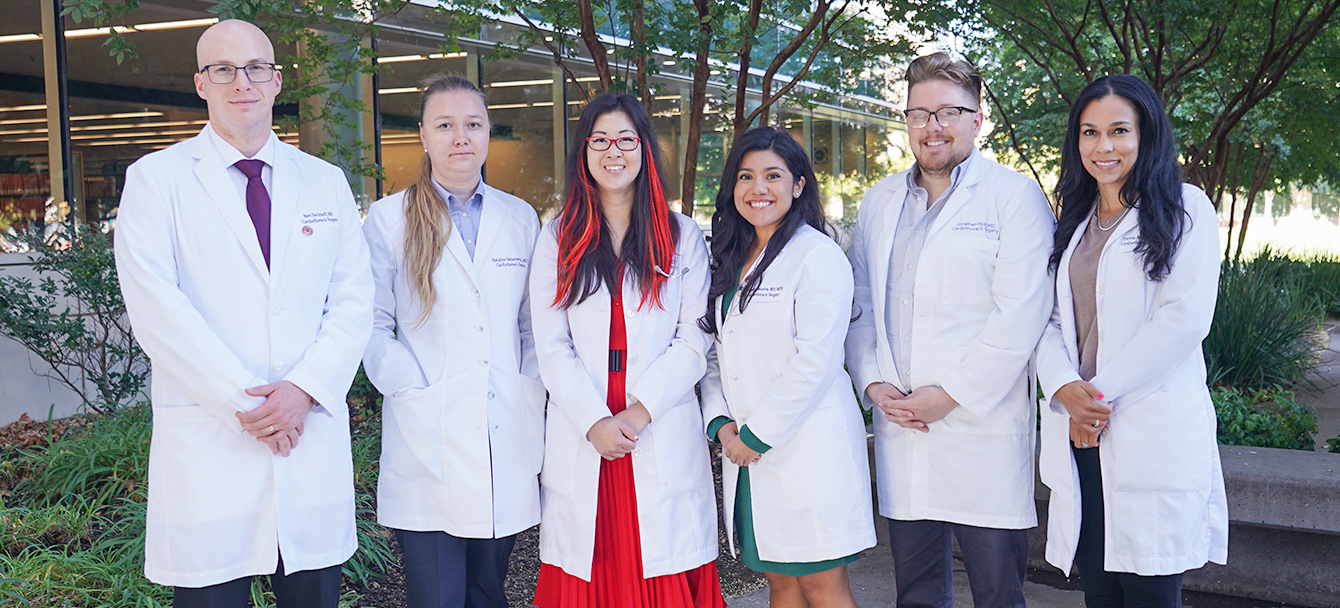
Thoracic Surgery Resident Roster
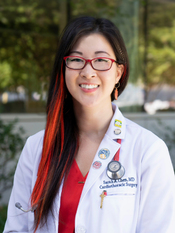
Sarah Chen, M.D., M.S., 5th Year Chief Resident Hometown: Santa Cruz, California
|
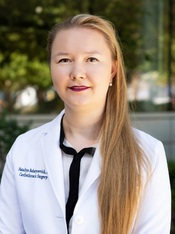
Nataliya Bahatyrevich, M.D., 4th Year Resident Hometown: Kyiv, Ukraine |
|
Hometown: Denver, Colorado |
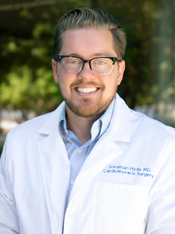
Jonathan Hyde, M.D., 3rd Year Resident Hometown: Bristow, Virginia |
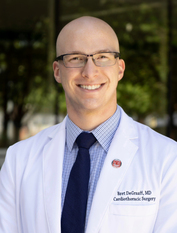
Bret DeGraaff, M.D., 2nd Year Resident Hometown: Lynden, Washington |
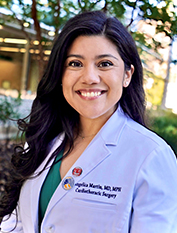
Angelica C. Martin, M.D., 1st Year Resident Hometown: Echo Park |
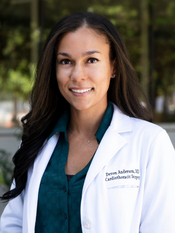 Devon Anderson, M.D., 4th Year Resident