Center for Virtual Care

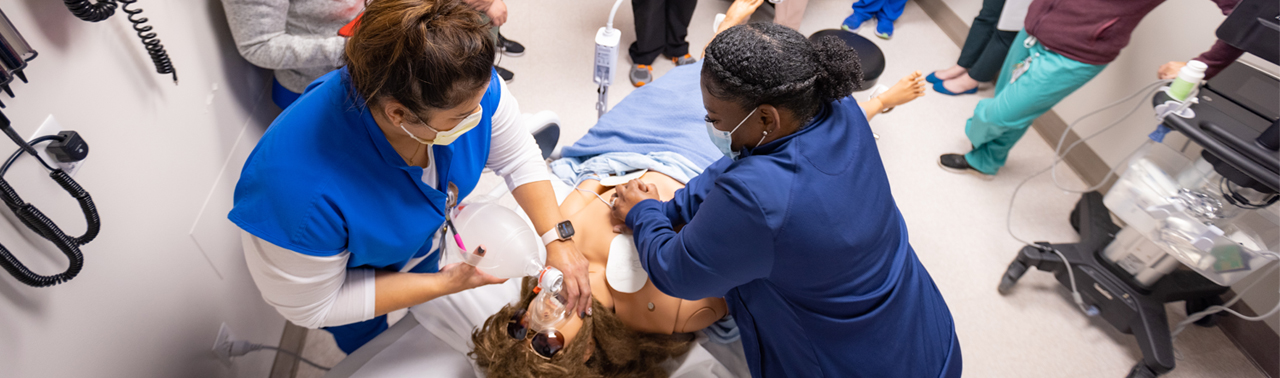
Just as technology is transforming the practice of medicine and the experiences of patients, it is also changing the way tomorrow’s doctors, nurses and other health-care professionals are being trained. At the UC Davis Center for Virtual Care, practitioners have access to an unprecedented array of sophisticated teaching aids, from human patient simulators that breathe and respond to treatment like real patients to surgical robots that hold instruments and respond to voice commands.
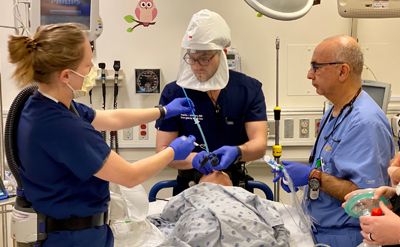
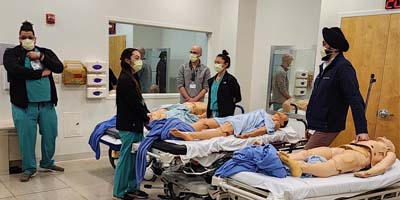
Based on flight simulation technology, patient simulation systems create a virtual hospital environment using sophisticated software, video graphics and life-size mannequins that allow students and trained professionals to practice new procedures, respond to real-life patient scenarios, and hone their skills.
Advanced robotics technology is also changing the face of surgery. Robots that control the movement of instruments and imaging devices during minimally invasive surgery are giving physicians better precision and increased dexterity, reducing hand tremors and allowing for smaller incisions. When combined with telecommunications technology, UC Davis surgeons hope to break the barriers of time and distance by performing remote surgeries on patients located thousands of miles away.
Bringing realism to preclinical education
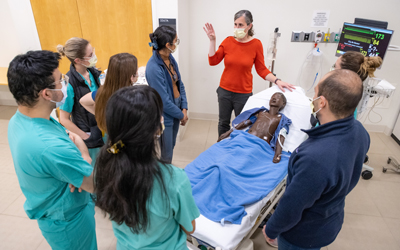
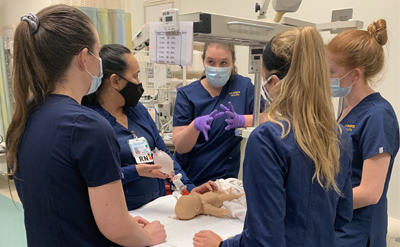
Patient simulators, programmed to act like nearly any adult or pediatric patient a doctor might encounter, are enabling student physicians, nurses and allied health professionals to perform common medical procedures and respond to rare and complex medical conditions and life-threatening emergencies.
Using sophisticated models of physiology and pharmacology, the mannequins — named “Stan” and “Morgan” — automatically produce a simulated response based on a student’s actions or interventions. A third portable mannequin allows physicians and nurses to train with paramedics in the field.
The simulators blink, speak, breathe, have a heartbeat, eight pulse points and a variety of other anatomical features that allow students to practice intravenous drug delivery, CPR, catheterizations, basic obstetrics skills, as well as airway management and respiratory therapy for both adult and pediatric patients.
Advanced training for interventional procedures
When physicians and nurses want to practice opening blocked blood vessels for the treat-ment of heart attacks or renal hypertension, they can turn to “Simantha™,” a patient simulation system that creates a realistic surgical environment for risk-free training.
The catheter system replicates mainstream use, allowing resident physicians and long-time practitioners to rehearse new interventional vascular procedures and devices for CME/CEU credit. These include balloon angioplasty and stents to open blocked blood vessels, which cause heart attacks and high blood pressure.
The simulation system produces distinct and unique experiences for each physician depending on his or her decisions, actions and response time. A variety of visual and tactile elements allow users to “feel” a lesion in the blood vessel and to hear patient comments during the procedure.
Innovations in the operating room
New surgical techniques that combine robotics, artificial intelligence and advanced imaging are enhancing the surgeon’s skills and redefining the operating room of the future.
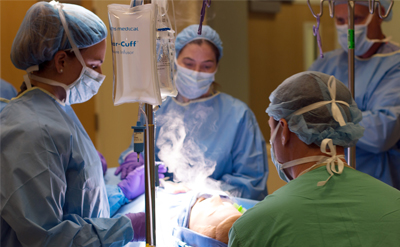
Unlike traditional surgeries, in which doctors make incisions large enough to give their hands room to work, minimally invasive procedures rely on tiny keyhole incisions, slender tools and a video camera that lets doctors view their work on video monitors. This approach allows physicians to perform many kinds of major surgery with less patient trauma and pain, minimal scarring, faster recovery and shorter hospital stays.
With robotics technology, physicians have access to a voice-activated endoscope and robotic arm, providing the surgeon with direct control over a smooth, precise and stable view of the internal surgical field. A voice-activated camera responds to spoken commands to move up, pan left or pull back, while video monitors let surgeons see their work magnified and in three dimensions.
The training lab at UC Davis allows for the development of new minimally invasive procedures and technologies while providing hands-on robotic training for medical residents, faculty and surgeons. With the integration of computer and communications technology, doctors will be able to mentor and teach surgeries taking place anywhere in the region.
To learn more about the Center for Virtual Care, please call (916) 734-4708 or e-mail cvc@ucdmc.ucdavis.edu.