
Basic Science Research Overview
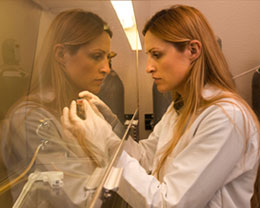 The UC Davis Department of Neurology is dedicated to using the very best in basic science to advance knowledge that will lead to improved diagnoses and better treatments for neurological diseases. Disorders of the nervous system are particularly difficult for scientists to study. They are also debilitating for patients and their families—all the more reason for our researchers to rise to the challenge of figuring out the complexities of the human brain.
Much of our basic research focuses on communication, on the ways that brain cells communicate with one another and how they communicate with other parts of the body. Laboratory studies are crucial to understanding what goes wrong when brain cells are loss and communication is disrupted, as in Alzheimer’s disease, or when communication between nerve cells and skeletal muscles, as in myotonia congenita, a painful genetic disorder.
Disturbances in the normal environment of the brain can also cause problems. For instance, sudden surges of electrical activity can trigger seizures, while disruptions in blood flow can lead to stroke. Our neuroscientists are looking to understand these processes, from the inherited genes that might lead to particular kinds of stroke, to the molecular mechanisms involved in setting off a seizure.
For more information about basic research at the UC Davis Department of Neurology, please visit the pages linked below:
 OUR NEUROSCIENCES