The UC Davis Stem Cell Program
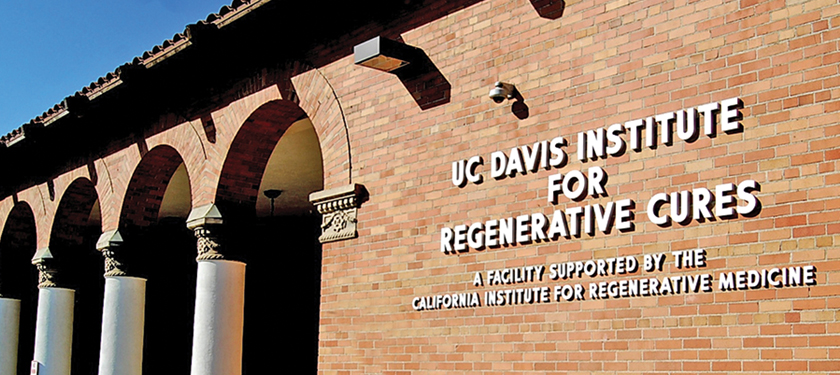
For patients and families suffering from chronic disease or injury, the promise of stem cell therapies offers great hope. UC Davis is a leader in advancing that promising goal. It has brought together physicians, research scientists, biomedical engineers and a range of other experts and collaborative partners to establish the UC Davis Institute for Regenerative Cures: a facility supported by the California Institute for Regenerative Medicine.
The new $62 million institute will be housed in a 90,000 square-foot facility on the university’s Sacramento campus, where collaborative, team-oriented science will advance breakthrough discoveries and bring stem cell therapies and cures to patients. This project will include primary laboratories and support space, a shared-vector core, microscopy and researcher cell sorters, space for academic, postdoctoral and administrative offices, along with conference rooms and a lecture hall.
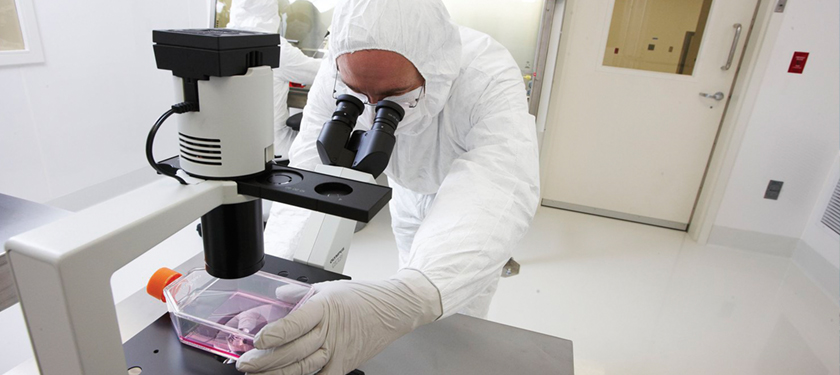
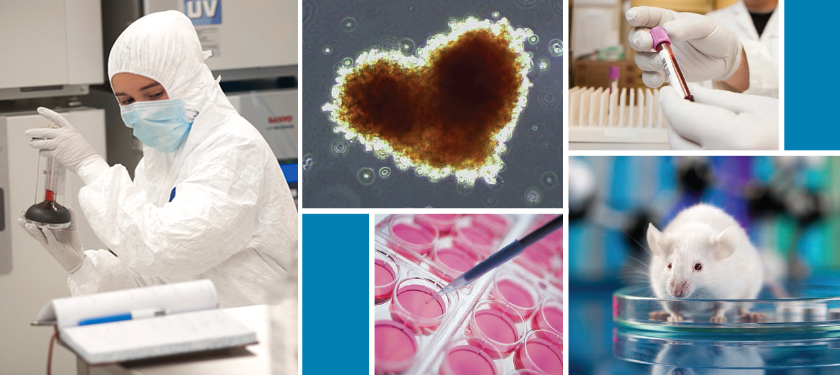
It also will include a highly specialized Good Manufacturing Practice (GMP) facility, which is a federally-certified cleanroom laboratory that enables researchers to safely move cellular therapies into clinical trials for patients.
The UC Davis Institute for Regenerative Cures is located on a campus that includes a nationally-designated cancer center, a renowned neurodevelopmental institute, state-of-the-art imaging and biophotonics programs, and an academic medical center that is at the forefront of the latest discoveries and advanced treatments.
Institute Goals
The UC Davis stem cell program brings together resources from throughout the university to ensure that bench research – the work done in laboratories – can be translated successfully into clinical treatments.
With an ability to repair damaged tissue and develop into specialized cells and organs, stem cells will have a major impact in medicine and health care. Research into stem and progenitor cell therapies is in full motion throughout UC Davis. Scientists are exploring and testing different techniques and approaches in laboratories so that new and safe therapies are available to patients. This translation of basic scientific discoveries into novel therapies and clinical practices is a hallmark of the UC Davis research.
Disease Teams
One of the keys to the UC Davis stem cell program is the integration of basic science and clinical medicine. Stem cell researchers, for example, are collaborating with vascular surgeons in preparation for clinical trials involving peripheral artery disease. The insights gained from a surgeon's knowledge of the vascular system are invaluable for the basic scientist who is investigating how to restore blood flow to a patient's limbs using stem cell therapy.
Similarly, ophthalmologists, internists, cardiologists, oncologists and other specialists are all working with research scientists in developing new ideas and pathways for stem cell therapies. Bringing together disease-specific teams with the full range of clinical knowledge and laboratory experience will help to rapidly advance stem cell discoveries and breakthroughs.
Disease team areas within the stem cell program include the following:
- Liver disease
- Eye degeneration and blindness
- Vascular disease
- Blood cell disorders
- Skin disorders (non-healing skin ulcers, melanoma, burns)
- HIV/AIDS
- Neurological diseases (Parkinson’s, Huntington’s and Alzheimer’s)
- Kidney and lung diseases
- Cartilage and bone abnormalities
- Bladder disorders
- Hearing loss and inner ear cilia repair
- Immunology and immunotherapeutics for cancer
- Tumor stem cells/Cancer
- Diabetes
Clinical Trials
Adult stem cells are the "paramedics of the body.” In animal models, they have been shown to move rapidly into areas of tissue damage, enhance repair, revascularization and blood flow, while reducing inflammation and scarring. UC Davis plans to launch a series of clinical trials following completion of its GMP facility, focusing on the following areas:
- Retinal occlusion – UC Davis ophthalmologists are working to begin clinical trials that could save the eyesight of patients with retinal occlusion, which is the loss of blood flow to the retina. This trial will use a patient’s own bone marrow stem cells.
- Heart attacks – This clinical trial will use stem cells from a patient’s bone marrow in an effort to repair damage to the heart tissue following a heart attack.
- Peripheral vascular disease – Institute researchers are partnering with the UC Davis Vascular Center to use a patient’s own bone marrow stem cells to grow new arteries in limbs. New stem cell isolation methods and novel catheters are being developed at UC Davis to transplant the cells.
- Huntington’s Disease – Adult stem cells will be used to deliver a therapeutic molecule that reduces the levels of a damaging mutant protein associated with Huntington’s. This trial will use normal, healthy donor stem cells.