Vascular specialists providing quality care for vascular diseases
The UC Davis Vascular Center is dedicated to providing comprehensive and state-of-the-art care for all vascular conditions, ranging from esthetic vein problems to complex, life-threatening vascular diseases. Our clinic team coordinates the efforts of multiple specialists for a complete, seamless and integrated approach to care, including diagnostic evaluations and treatment plans that can encompass medical management, surgical reconstructions and minimally invasive procedures.
Our physicians provide comprehensive outpatient and inpatient services, including critical care. The center’s infrastructure for diagnosis and treatment is unparalleled in the region — from the busiest noninvasive vascular lab in California to a hybrid surgical suite that combines the technologies needed for both endovascular and traditional open operations.
Vascular diseases and conditions we treat
From abdominal aortic aneurysms to varicose veins, find out more about different vascular conditions along with risk factors, preventions and treatments.
Clinical research
Innovative clinical trials contribute to scientific advances and improve care for vascular patients worldwide.
Our team
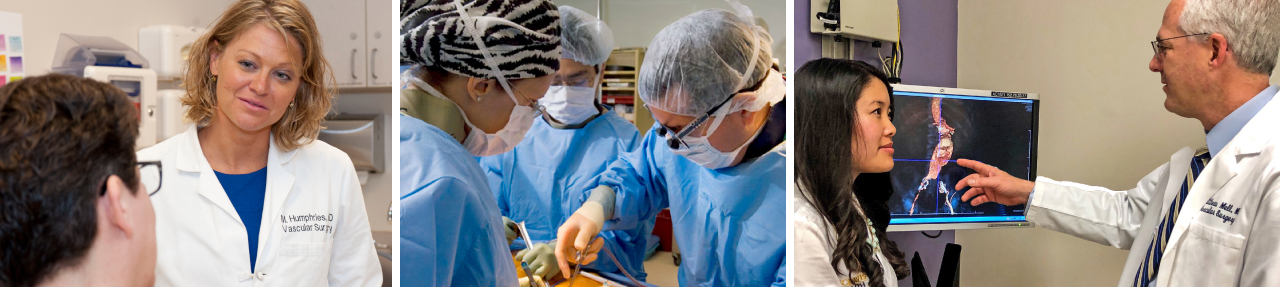
A complete team of specialists who are united in their dedication to improving quality of life for those with vascular conditions.
Guidelines for primary-care providers
How primary-care providers can link with our specialists to assure quality care for vascular patients.