Office of the Vice Chancellor and Dean | UC Davis Health
UC Davis Health
Office of the Vice Chancellor
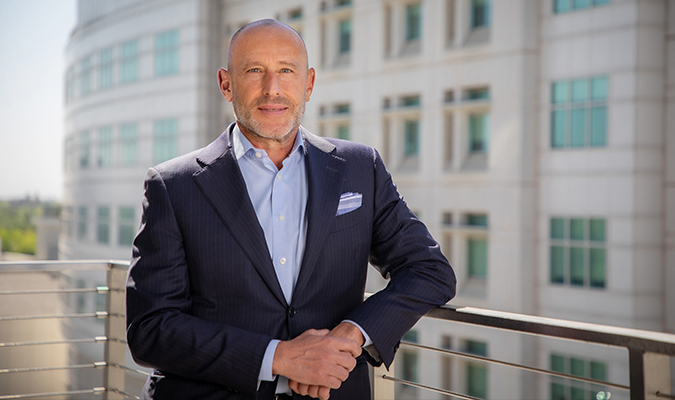
David Lubarsky, M.D., M.B.A., F.A.S.A.
Vice Chancellor of Human Health Sciences and Chief Executive Officer, UC Davis Health
David Lubarsky, M.D., M.B.A., F.A.S.A., is the Vice Chancellor of Human Health Sciences and CEO of UC Davis Health in Sacramento. UC Davis Health is an integrated health system with 20,000 employees, 1,000 students, 1,000 trainees, 1,300 faculty members and a large regional primary care network that provides 1.5 million-plus outpatient visits every year. Dr. Lubarsky oversees UC Davis Health’s academic, research and clinical programs, including a Top 10 ranked School of Medicine, Top 25 ranked Betty Irene Moore School of Nursing, and the Top 50 ranked UC Davis Children’s Hospital and UC Davis Medical Center. UC Davis Medical Center, the health system’s flagship hospital, is a 684-bed Level 1 Trauma hospital consistently ranked among the nation’s best by U.S. News & World Report, Newsweek, and Becker’s. Dr. Lubarsky has been recognized as one of the “100 Most Influential People in Health Care” by Modern Healthcare.
UC Davis Medical Center, a 648-bed Level 1 Trauma hospital consistently ranked among the nation's best by U.S. News & World Report, Newsweek, and Becker's.
UC Davis Medical Center, in partnership with Shriners Children's Northern California, also operates a top 50 children's hospital, as ranked by U.S. News & World Report. UC Davis Health includes a second hospital, the UC Davis Rehabilitation Hospital. The health system is an innovation hub for biomedical discoveries that helps advance health around the world. It is ranked in the top 35 nationally for medical research.
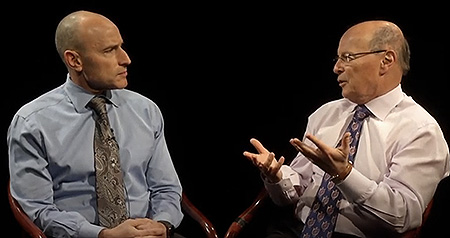
Watch VideoDr. David Lubarsky, vice chancellor of Human Health Sciences and CEO of UC Davis Health is interviewed by Dr. Fred Meyers.
Among new initiatives, Lubarsky established a key partnership with Sacramento County Health Services as well as other initiatives with health allies. These collaborations aim to expand primary and specialty care to the underserved, reform the managed care system, and address the crisis in mental illness and homelessness. He has positioned UC Davis Health as a resource to "complete, not compete" with other health systems to improve access and care throughout the region.
A strong proponent of physicians and academic medical centers playing a leading role in shaping health care policy, Lubarsky brought all 1,000 physicians into the California Medical Association and its Sierra Sacramento Valley Medical Society. He embraces team practice and advanced nursing practice, with the Schools of Medicine and Nursing pursuing new levels of interprofessional learning, training and practice.
UC Davis Health serves more than half of California's counties as the only academic medical center between San Francisco and Portland, Ore. To recruiting address, training and retaining doctors in rural areas throughout Northern California, Lubarsky partnered with Adventist Health and the California Medical Association. He also championed novel training programs to advance rural and inner city care now embraced by the American Medical Association (AMA) as national models. To adapt to health care's evolution and leverage UC Davis' early success in creating California's telehealth backbone, Lubarsky is creating a digital platform and virtual hospital to lead in technology and connectivity. He's doing all of this while reinforcing the values of empathy, inclusivity and a patient-centric ethic.
I believe everything we do should be about bringing greater health to the people we serve.—David Lubarsky, UC Davis Health chief executive officer
Lubarsky was appointed by Gov. Gavin Newsom to the statewide governor's Alzheimer's Disease Task Force. He's proud of UC Davis Health's nation-leading Alzheimer's research program, ranked 14th nationally in Alzheimer's research funding. UC Davis takes a public health approach to its studies and programs., The health system pays special attention to measuring the toll of the disease across the social spectrum, identifying groups that are disproportionately impacted, and researching the differences between Alzheimer's and dementia. UC Davis Health's national ranking in geriatric care — 23rd nationally by U.S. News & World Report — is another important part of supporting patients, as well as caregivers through a nationally modeled Family Caregiving Institute.
A committed academic physician, Lubarsky is a professor of anesthesiology, nursing and business at UC Davis. He is also on the faculty of the UC Davis Graduate School of Management. Previously, Lubarsky was chief medical officer and systems integration officer at the University of Miami Health System. There, he pioneered the current integrated structure as the first CEO of the system's 1,100-physician practice. He was also a professor of anesthesiology and department chair in Miami's Miller School of Medicine, a professor in the Schools of Business and Nursing. Before Miami, Lubarsky was a professor and vice chair at Duke University and adjunct professor at Duke's Fuqua School of Business. He's one of the top 100 published anesthesiologists in America.
Lubarsky earned his Bachelor of Arts in history (1980) and medical degree (1984) at Washington University in St. Louis. He completed an anesthesia residency and a fellowship in cardiovascular anesthesia and clinical research at New York University Medical Center. He received his MBA (1999) from the Fuqua School of Business at Duke University, graduating at the top of his class.
UC Davis Medical Center, based in Sacramento, Calif., is a nationally renowned academic medical center where clinical practice, teaching and research converge to advance human health.
A few highlights:
A 600+ bed multispecialty academic medical center
Serves 33 counties covering a 65,000-square-mile area north to the Oregon border and east to Nevada
The Medical Group represents all organized medical group practices of UC Davis Health’s primary and specialty care faculty physicians. The group's purpose is to serve the health system’s missions through high-quality, cost-effective care delivery. By delegation from the Office of the Vice Chancellor and Dean, the Medical Group has shared responsibility for the clinical operations of the health system's professional practice activities.
The formation of the Medical Group is an important step in formalizing the leadership of the health system's medical group practices and in refining the role of its group practice in achieving the health system's research, teaching, patient care and community engagement goals. Its primary goal is to maintain a clinical practice that distinguishes UC Davis Health as a leading faculty and academic health center.
Specific goals of the Medical Group include:
Increasing efficiency of practice and revenue
Decreasing practice expenses
Reducing silos and improving integration
Identifying areas to increase quality
Aligning incentives
Debbie Aizenberg, M.D. is the interim executive director of the Medical Group, overseeing faculty practice operations as well as the overall vision and strategic direction of the Medical Group and its day-to-day activities. She collaborates with the leadership of theSchool of Medicineandmedical centerto set and achieve joint strategic goals across the health system.
UC Davis School of Medicineis one of the nation's leading medical schools, recognized for its research and primary-care programs. The school places in the top 10 in the nation for primary care training, the top 20 percent of institutions in the country for research funding from the National Institutes of Health (NIH), and is home to one of the nation’s inauguralClinical Translational Science Centers.
A few highlights include:
A national reputation for life-changing biomedical discoveries
A passion for clinical care and a commitment to engaging people from underserved communities and advancing rural health
A combinedM.D.-Ph.D. programthat is training the next generation of physician-scientists to conduct high-impact research and translate discoveries into better clinical care
The Betty Irene Moore School of Nursing at UC Davis cultivates academic excellence and addresses urgent, societal needs through leadership development, interprofessional education, transformative research, cultural inclusiveness and innovative technology. The school plays a critical role in preparing nurse leaders who will shape the future of health care and inform health policy.
The School of Nursing has five research focus areas: chronic disease management, health technology, pain management, Healthy People and Healthy Systems. Faculty come from a wide range of backgrounds including nursing, business administration, sociology, gerontology, medicine, information technology and psychology. School of Nursing students engage in classroom and clinical environments with students in the School of Medicine, health informatics and other health-related programs.
Ranked Sacramento’s #1 hospital by U.S. News, and high-performing in COPD, colon cancer surgery, diabetes, heart attack, heart failure, hip fracture, hip replacement, kidney failure, leukemia, lymphoma & myeloma, lung cancer surgery, ovarian cancer surgery, pneumonia, prostate cancer surgery, stroke, TAVR, uterine cancer surgery, gastroenterology & GI surgery, and orthopedics.
One of America’s best physician assistant programs
U.S. News & World Report ranks the Betty Irene Moore School of Nursing’s Master of Health Services — Physician Assistant Degree Program 40th in the nation (tie).
UC Davis Health has been recognized as a level 10 out of 10 in the Digital Health “Most Wired” program from the College of Healthcare Information Management Executives (CHIME). The honor recognizes excellence in using technology to improve the delivery of care.
UC Davis Health has been recognized as a level 10 out of 10 in the Digital Health “Most Wired” program from the College of Healthcare Information Management Executives (CHIME). The honor recognizes excellence in using technology to improve the delivery of care.