



Surgery for liver cancer
UC Davis Comprehensive Cancer Center offers comprehensive, multidisciplinary care for patients with all stages of liver cancer aimed at preservation of critical functions, prevention of disease recurrence and optimization of quality of life.
Your team of cancer specialists will include surgical oncologists, medical oncologists, radiation oncologists and interventional radiologists who will consult with you to determine the best treatment approach for your cancer.
The UC Davis liver cancer program utilizes a full team of professionals and revolutionary techniques to treat patients and relieve them of their symptoms.
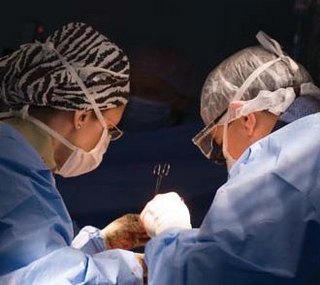 Surgical interventional approaches include:
- Primary resection: This surgery removes cancerous lesions with techniques that minimize blood loss.
- Microwave ablation: This minimally invasive technique involves placement of a needle electrode directly into the tumor, which then uses microwaves to induce an ultra-high-speed alternating electric field to destroy tumor cells.
- Radiofrequency ablation: In this approach, imaging techniques such as ultrasound, computed tomography (CT) or magnetic resonance imaging (MRI) are used to help guide a needle electrode into a cancerous tumor. High-frequency electrical currents are then passed through the electrode, creating heat that destroys the abnormal cells.
- TACE (trans-arterial chemoembolization): This interventional radiology procedure is used in patients who cannot undergo tumor-removal surgery, and is used to manage symptoms and improve outcomes. TACE blocks the hepatic artery – the artery from which liver cancers derive their blood supply – and directs chemotherapy to the tumor site.
- Portal vein embolization: This procedure is designed to shrink part of the diseased liver and stimulate growth of the remaining healthy liver. It is used in some patients prior to surgery to avoid the possibility of liver failure occurring due to a small liver remnant.
- Radioisotope embolization: This interventional radiology procedure is for patients who do not respond to TACE. The procedure involves the injection into the hepatic artery of tiny beads called microspheres that are impregnated with Yttrim-90, a radioisotope. The microspheres block the blood vessels that supply the tumor and irradiate the tumor site.
Khatri VP. Synchronous colorectal liver metastases: triumph of prospective randomized trials over observational bias leads to paradigm shift. Annals of Surgical Oncology. 2009 Jul;16(7):1762-4.
MORE »
Khatri VP, Chee KG, Petrelli NJ. Modern multimodality approach to hepatic colorectal metastases: solutions and controversies. Surgical Oncology. 2007 Jul;16(1):71-83.
MORE »
Khatri VP, Shah MH, Petrelli NJ, Li Y, Beckett L, Gibbs JF, Rodriguez-Bigas MA. Type-2 dominant cytokine gene expression following hepatic surgery. Journal of Hepatobiliary Pancreatic Surgery. 2006;13(5):442-9.
MORE »
Oncologists Specializing in Liver Cancer
Surgical Oncology
 Cameron Gaskill, M.D., M.P.H.
Assistant Professor of Surgery
Diagnostic Radiology
 John P. McGahan, M.D.
Professor of Radiology
Chief of Abdominal Imaging and Ultrasound
Gastroenterology
 Shiro Urayama, M.D.
Professor of Medicine, Gastroenterology
Hematology and Oncology
 Edward Kim, M.D., Ph.D.
Associate Professor of Internal Medicine, Hematology and Oncology
 Kit W. Tam, M.D.
Assistant Professor of Internal Medicine, Hematology and Oncology
 Rashmi Verma, M.D.
Assistant Health Science Clinical Professor
Dietitians
 Danielle Baham, M.S., R.D.
 Kathleen Newman, R.D., C.S.O.
Genetic Counselors

 Nicole Mans, M.S., L.C.G.C.
 Jeanna Welborn, M.D.
Social Work
 Sarah Conning, L.C.S.W., O.S.W.-C.